



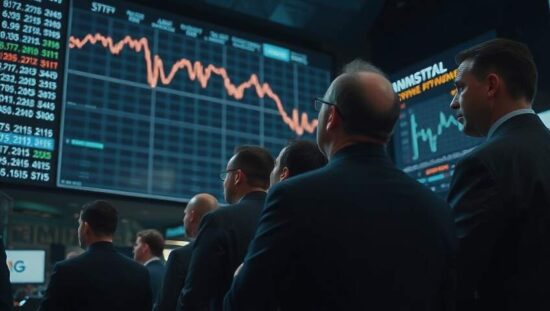
On Thursday the German market index, the DAX, fell sharply. By the end of the Xetra session it was quoted at 22,613 points-a decline of 1.5 percent from the previous close. After a weak opening, the index stayed in the red for the entire day.
According to Andreas Lipkow, chief market analyst at CMC Markets, investors remain tense because the United States is approaching the deadline for its ultimatum against Iran. “The Middle‑Eastern conflict is the overarching theme on the trading floor” Lipkow said. “Brent crude now acts like an EKG for the DAX”. He noted that whenever a trading day sees oil trading above $100 a barrel, market sentiment worsens. “The threat of stagflation is steadily rising, and in Europe it could trigger a recession. European countries are caught in a painful energy‑inflation sandwich, with both rising prices and faltering growth squeezing corporate balance sheets” he added. “These worries are amplified by contradictory news from the Middle East, and investors are pricing that uncertainty into their trades”.
Lipkow also pointed out that there are no other catalysts currently brightening market sentiment. “All macro‑economic releases are being pushed to the background. The developments in the Middle East remain the dominant narrative for now”.
In the stocks sector, the shares of BASF, Brenntag and FMC remained at the top of the performance list until near the close. At the bottom of the list were Zalando and Siemens Energy.
Gas prices climbed as well. A megawatt‑hour of gas for April delivery cost 56 €-up 5 % from the previous day-implying a consumer price of roughly 10 to 13 cents per kilowatt‑hour, including ancillary costs and taxes, if the price level stays.
Oil prices also surged. A barrel of Brent crude fetched €108.40 on Thursday afternoon around 17:00 German time, a 6.1 % increase compared to the previous day’s close.
On the currency front the euro weakened. The euro was priced at 1.1535 USD, meaning one US dollar could be bought for 0.8669 EUR.