




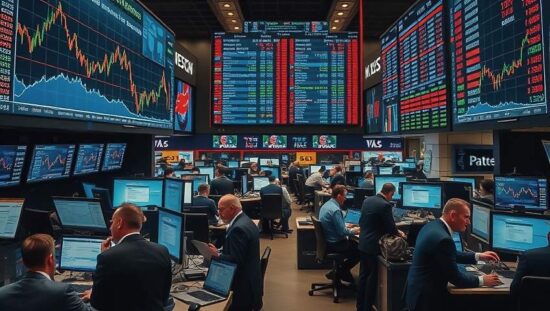
The German stock index DAX opened Thursday morning in the red. At about 9:30 a.m. local time the benchmark had settled at roughly 24,070 points, a drop of 0.6 % from the previous day’s close. Merck, Airbus and Heidelberg Materials were the strongest performers, while Deutsche Post, Qiagen and Continental slipped to the bottom of the list.
Thomas Altmann of QC Partners noted that volatility at the exchanges remains high and is likely to stay that way for some time. Early bargain hunters took advantage of the falling prices, giving the market a temporary floor. “Most of us are waiting to see how events unfold in the Middle East” he said.
Oil prices continued to climb. A barrel of North Sea Brent crude was trading at $84.04 at 9 a.m. CET, up 3.2 % from the prior close. Altmann warned that the longer the war and the blockade of the Hormuz Strait persist, the greater the impact on global energy supply, turning the conflict into a threat not only to the directly involved parties but to the worldwide economy.
The rising oil prices and the accompanying fear of a second inflation surge are driving changes in policy‑rate outlooks. In the United States, the probability of two rate cuts this year is now priced at 66 %. Before the outbreak of war, the chance of a third cut stood at 40 %. In the eurozone, investors now see a 25 % probability of a rate hike this year, whereas last Friday there was a 50 % chance of a cut.