




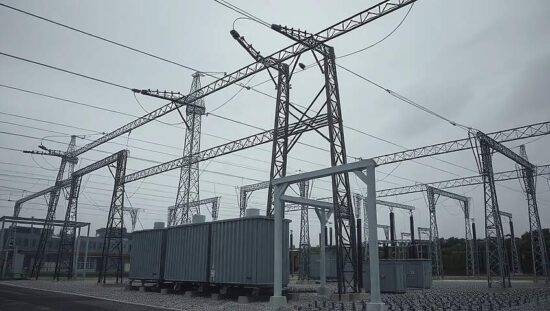
The recent attack on Berlin’s power grid has ignited a fierce debate within Germany’s political establishment regarding the balance between transparency and security for critical infrastructure. Concerns are mounting that current regulations mandating openness for sectors like energy and healthcare may inadvertently be facilitating malicious actors.
Christoph de Vries, Parliamentary Secretary in the Federal Ministry of the Interior, has voiced strong reservations about the existing transparency requirements, arguing they act as a “direct invitation for the enemies of our democracy” to target vulnerable infrastructure. In statements to Funke-Mediengruppe newspapers, de Vries warned that detailed disclosures create readily exploitable blueprints for devastating attacks on citizens and businesses.
The Association of Municipal Utilities (VKU) echoed these concerns, stating that current transparency rules provide attackers with an overly simplistic means of identifying network vulnerabilities. A VKU spokesperson emphasized the potential for sensitive location data to be exposed, transforming into “a user manual for sabotage or hybrid attacks – for example, with drones”. The organization stressed that critical infrastructure must not be readily accessible for examination. They advocate for simplifying disclosed information to a degree that prioritizes security and prevents the revelation of sensitive details.
Marc Henrichmann, chairman of the Bundestag’s intelligence oversight committee, reinforced the urgency of the situation. “All-encompassing transparency has become a genuine security risk under current conditions” he asserted to Funke-Mediengruppe. Henrichmann highlighted the ease with which attackers can utilize publicly available mapping tools like Google Maps to identify potential targets, effectively providing them with pre-existing intelligence. He called for measures that would render the detailed reconnaissance of critical infrastructure a significantly more challenging undertaking.
The Berlin attack has prompted renewed calls for decisive government action to safeguard essential services. De Vries specifically urged a swift passage of the “Kritis-Dachgesetz” (Critical Infrastructure Law) through both the Bundestag and Bundesrat. The proposed legislation mandates operators of critical infrastructure to conduct regular risk assessments and implement necessary protective measures. However, some observers question whether a robust legal framework is sufficient, suggesting that a broader reassessment of Germany’s security posture and a more cautious approach to data disclosure are required to effectively mitigate the growing threat landscape. The debate highlights a fundamental tension: the principle of open governance versus the increasingly critical need to defend against sophisticated, state-sponsored attacks.