



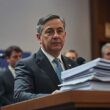

Thorsten Frei, the head of the Chancellery (CDU), expressed optimism regarding the current black-red federal government’s first anniversary, stating that both the Union and the SPD must continue their joint rule until the end of the legislative period. He argued that the coalition “must and will persevere to fulfill its mandate”. Frei emphasized that merging diverse positions must aim not for the lowest common denominator, but rather strategies that leverage the country’s competitive strengths.
While acknowledging that achieving these goals will be challenging, the CDU politician affirmed that the coalition is already tackling major overhauls, including reducing the corporate tax, implementing the “Activity Pension” system, and abolishing the Bürgergeld (Citizen Benefit).
He stressed the need for rapid action in the coming weeks. “We are setting a high pace” he stated. “The health reform must be passed by parliament before the summer recess. We must proceed just as quickly with care and pensions. None of us can afford to waste time”.
Regarding the recently approved healthcare reform, Frei defined achieving contribution stability as the shared goal. He asserted that “the most social policy is one that does not lead to annually rising contributions”. He noted that despite Germany having one of the world’s most expensive health systems, it does not yield excellent results. The reform, according to him, ensures that expenditures align with revenues, holding all stakeholders-from doctors and the pharmaceutical industry to insured citizens-responsible for change, calling it an issue of fairness.
Frei also addressed political headwinds, describing recent polls showing the AfD significantly ahead of the ruling parties as “alarmed”. He concluded that if the far-right becomes strong, the center must perform better. This, he said, motivates them, as their clear objective is to boost competitiveness and secure jobs to counter extremist influence.
On the planned income tax reform, Frei aims for “genuine relief for as many taxpayers as possible”. He dismissed the idea of achieving reform merely by keeping tax neutral or treating it purely as redistribution. Instead, he argued that genuine relief must boost the domestic economy. His stated goal is an income tax reform that offers dividends to those with small and middle incomes. He criticized the current system where peak tax rates apply too early, starting around €70,000, arguing that the highest rate should target the genuinely wealthy, rather than excessively taxing the middle class-a burden he suggests that even jeopardizes the middle class’ dream of owning a home.
While batting away the AfD’s criticism concerning high future public debt, Frei justified the expenditure, arguing that “the security of our country should justify this effort”. He maintained that peace can only be ensured by credibly deterring Russia, explaining that most additional debt is linked to defense investments. He detailed the expected spending jump, from a defense budget of 50 billion to nearly 200 billion Euros in a few years, emphasizing that the government must work hard to find further departmental savings.
Crucially, Frei ruled out suspending the debt brake again, dismissing the possibility floated by the SPD. He argued this is not an option, warning that “if we continue this way, we will pay 80 billion Euros just in interest by 2030”. He concluded that accumulating more debt is irresponsible, as it continuously curtails the government’s room for action.