




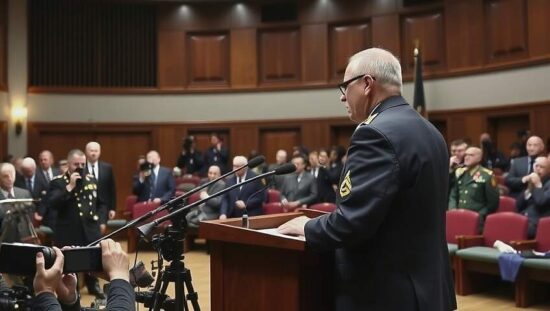
Before the Munich Security Conference, André Wüstner, chairman of the German Armed Forces Association, openly criticised the slow pace of Germany’s and Europe’s rearmament.
Wüstner praised the federal government’s decision to exempt defense spending from the debt‑breach rule, stating that the policy is “the right way forward”. Yet he warned that the Bundeswehr’s combat power has not improved much since 2022. New weapons systems and ammunition are arriving, but at a pace that remains too slow. According to Wüstner, the German government is judged by NATO on military capability and readiness rather than the number of new recruits or the quantity of arms ordered-a metric where Germany still looks bleak.
He called for a fundamental restructuring of the armed forces. The officer said Germany cannot afford a lengthy shift from a peace to a defense posture in an emergency. “Therefore we need to reorganise in line with how we intend to defend-this automatically requires changes to our organisational and personnel structures” he asserted. Wüstner described the challenge facing the Bundeswehr as “the greatest task since its founding”.
The critique extends beyond Germany. Wüstner identified serious gaps in the rearmament plans of key European allies. “Many do not yet have clear upgrade plans, nor rising defense budgets to meet NATO’s planning targets” he said. This shortfall, he added, is not shared by Scandinavia or Eastern Europe, but is particularly acute in nations like France and the United Kingdom, which often speak loudly but fail to follow through.
Concerning personnel, Wüstner slammed Defense Minister Boris Pistorius’s target of 260,000 active soldiers and 200,000 reservists as too low. “That number was a political figure based on a rough estimate” he said. Wüstner pointed out that the United States has now clearly designated Europe as the main holder of conventional security architecture, making the personnel requirement even higher. Despite recent recruitment successes, he argued that relying solely on voluntary enlistment is unrealistic for achieving the full range of required capabilities.
A deficit also exists in the defense industry. “I do not want to generalise, but there have been-and will continue to be-cases where deliveries have not met promised timelines or quality standards” Wüstner observed. He urged companies to find a way to translate the money they raise into tangible results. The Russian threat, he stressed, is characterised by mass, pressure, and adaptability. If Putin decides to challenge NATO’s eastern flank, Germany cannot wait for a procedural pause; it must already be on the ground, prepared for defense.
Pistorius, according to Wüstner, enjoys unprecedented support: confidence from the troops, the will of the government, parliamentary backing, a healthy defense budget, and public endorsement. “Which defense minister ever had all that?” Wüstner asked. He warned that, despite this strong foundation, Pistorius must not lose focus, for the responsibility to deliver is immense.