




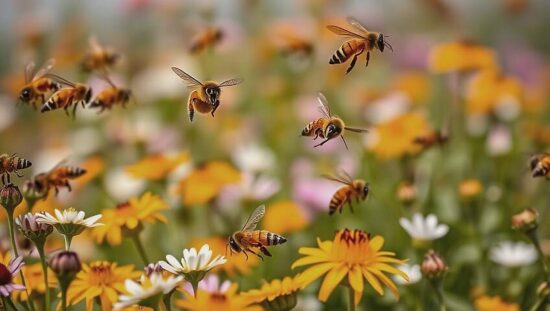
Bumblebees are efficient decision makers, flexibly adjusting their foraging strategies to the information available to them. In a study by researchers from the University of Konstanz and the University of Würzburg, the insects store only as many floral characteristics as are necessary for reliable discrimination-saving time and energy in the process.
While searching for nectar and pollen, bumblebees visit hundreds of flowers each day, and each one demands a quick decision: is the landing worthwhile? To conserve energy, the insects remember which flower types have previously provided food. They can detect various traits such as colour, shape, pattern, or scent.
In the experiments, the researchers trained bees to associate specific colour‑shape combinations with a sucrose solution. For example, a blue, star‑shaped flower rewarded the animal with sugar, whereas a yellow, round flower contained only water. After several trials, the bees consistently flew towards the rewarded flowers, indicating that they had retained the relevant traits.
The crucial question was which information the bees actually used when making decisions. To test this, the scientists recombined the learned features: the previously rewarded shape appeared in a new colour. The results were clear. When the colours in the training phase were easily distinguishable, the bees later relied almost exclusively on colour, ignoring shape.
The situation was different when the colours were very similar, such as yellow and orange. In that case the bees also learned the shape or pattern of the flower. When later presented only with grey flowers, the bees chose the correct shape far more often-though it took them more time to learn in the first place.
Thus the insects appear to follow a “just enough, not more” strategy. If one feature is unequivocal, it suffices; only when discrimination becomes difficult do they process and store additional details. According to the researchers, this approach reduces cognitive load and conserves valuable resources.