




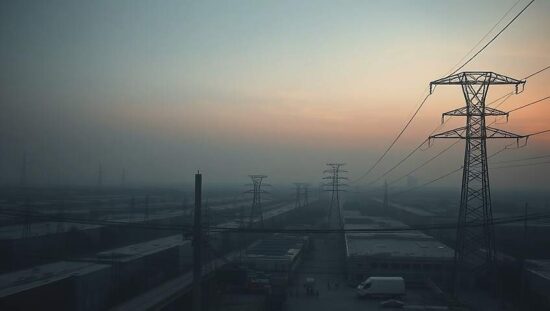
The recent widespread power outage in Berlin has ignited a fierce debate over the resilience of Germany’s critical infrastructure, with experts pointing to a systemic lack of investment and insufficiently stringent regulatory oversight. Manuel Atug, spokesperson for the independent expert group AG Kritis, characterized the situation as a consequence of prioritizing appearances over genuine security, stating that companies are only taking measures mandated by law and frequently no more.
Beyond the immediate inconvenience for Berlin residents, the incident underscores a broader vulnerability within Germany’s national infrastructure. Atug warned against viewing the power failure as an isolated event, arguing that similar weaknesses are prevalent throughout the country due to a political reluctance to enforce robust preparation for potential crises. He expressed a cynical view, suggesting that “it appears we must first endure significant casualties before enacting adequate legislation to protect this critical infrastructure.
The criticism is largely directed at the Federal Interior Ministry, which AG Kritis accuses of lacking the political will to implement stronger regulations, particularly a comprehensive Kritis-Dachgesetz (Critical Infrastructure Protection Act). According to Atug, the ministry prefers to showcase symbolic projects, such as drone defense centers, that offer little tangible security benefit, rather than investing in essential, albeit less politically appealing, protections for the power grid and other vital systems. He alleges that implementing concrete protective measures simply fails to generate “political points.
Kai Strunz, an energy expert from the Technical University of Berlin, corroborated the assessment, outlining significant deficits in the network’s resilience. Strunz emphasized the apparent absence of sufficient redundancy, noting that alternative supply lines capable of quickly restoring power to affected areas were conspicuously absent. The protracted five-day repair period following the suspected sabotage of a cable bridge at the Teltow Canal further highlighted the fragility of the system. “Five days to restore power in a major metropolitan region is simply unacceptable and demonstrates a lack of robustness” Strunz stated.
While acknowledging that achieving absolute security is impossible, Strunz stressed the paramount importance of preparedness and recovery measures. He called for the development of genuine “resilience plans” for infrastructure operators, plans that go beyond mere procedural compliance and demonstrably enhance the network’s ability to withstand and recover from disruptions. These calls are now intensifying, demanding a shift in priorities from superficial displays of security to substantive investment in Germany’s critical infrastructure.