




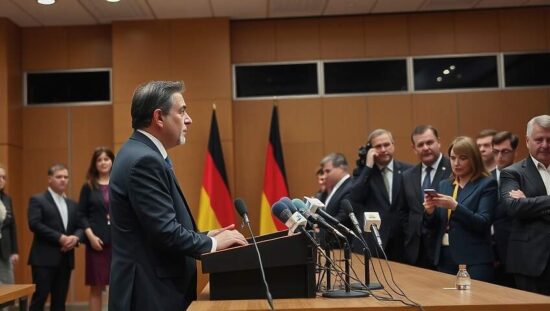
The finance minister of Baden‑Württemberg, Danyal Bayaz of the Greens, has called for tighter coordination of authorities as a consequence of the Cum‑Ex fraud. He said to the “Frankfurter Allgemeine Zeitung” that first “we need powerful oversight and adequate resources”. This applies to the entire tax and financial administration at both federal and state levels, as well as to financial supervision. “We also need a culture that genuinely wants to investigate and put results into practice” he added. Second, he emphasized the need for the technological tools that will allow us to find the needle in the digital haystack.
Bayaz stresses that the solution should not rely merely on more money or new agencies, but on improving the qualitative skills of staff and on better communication among existing bodies. “Ultimately it isn’t about creating new institutions but about better networking the structures we already have, breaking down silos and bringing threads together earlier – especially on the international front – so we can deliver faster outcomes”.
In the summer, the Stuttgart public prosecutor’s office brought charges against two former employees of Landesbank Baden‑Württemberg (LBBW). The men allegedly carried out illegal share transactions in 2008 that caused the state a tax loss of roughly €145 million. Whether the indictment will be accepted is still undecided.
Bayaz did not comment on the specifics of the case, but noted that at the tax administration level there has always been an intensive, open exchange among all federal states, including Baden‑Württemberg. “I have essentially the impression that all parties involved are keen to resolve the matter – even if merely out of self‑interest” he said. “For the finance administration I can say that where criticism existed we followed up on it. Of course we have learned from it as well. We must prevent such events from happening again, and we must speed up the resolution of criminal cases”.
When asked about international best practice, Bayaz said he still sees Italy ahead of Germany in tackling economic and financial crime. “My Italian colleagues tell me that a cash‑limit scheme hampers money laundering and makes it easier for authorities to clamp down on criminals” he noted. An EU‑wide cash limit of €10,000 for business transactions will take effect mid‑2027. “That is an important step forward”. No such limit is planned for private transactions at the moment, but an EU‑wide solution of a similar magnitude could be considered.