




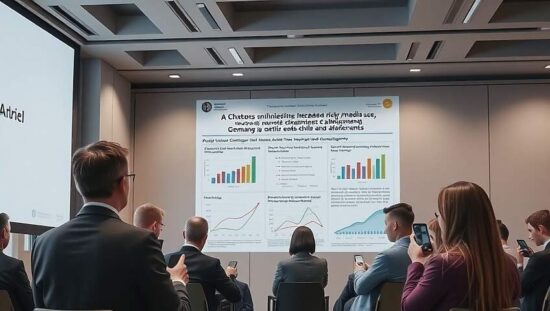
A study carried out by DAK‑Gesundheit and the University Hospital Hamburg‑Eppendorf and presented in Berlin on Tuesday shows that AI chatbots are amplifying risky media use among children and adolescents in Germany.
According to the research, almost eight percent of minors use AI applications to combat loneliness. Among youths who experience depressive symptoms, the figure rises to more than 30 percent. More than a quarter use AI services several times a week, and from age 15 onward, over half report at least weekly use.
Notably, up to about ten percent of children and teens turn to chatbots to distract themselves from negative emotions, ease loneliness, or share confidential matters. The numbers climb sharply when the sample is restricted to those already showing depressive symptoms. Nearly one‑third of those youths say they tell chatbots things they would not share with anyone else or only with close friends, and the same proportion believes a chatbot understands them better than a real person.
The study further confirms that AI chatbots are no longer a peripheral part of young people’s digital everyday life. More than two thirds trust the chatbot’s statements at least once, and over 40 percent trust it often or very often. The main reasons for turning to the technology are help with homework and information seeking, while slightly more than half use it simply out of curiosity or for fun.
Meanwhile, millions of children and adolescents in Germany still struggle with excessive media consumption. About 1.5 million young people are estimated to use social media problematically, meaning they are at risk of or already experiencing addiction. In the 2025 survey wave, 21.5 percent of 10‑to‑17‑year‑olds used social media riskily-equivalent to 1.1 million children. The previous year’s figure was 21.1 percent, leaving the overall level essentially unchanged.
For pathological use, the numbers have climbed: 6.6 percent of 10‑to‑17‑year‑olds were classified as addicted or dependent in 2025, implying roughly 350,000 children and adolescents with a pathological pattern of use-a 1.9‑percent increase from the year before.
Since 2022, the study has also examined online video consumption. There is a clear rise: one in five youths now use streaming services, reels, and similar formats in a risky manner-a 60‑percent jump compared to the prior year. Four percent of children and adolescents meet addiction criteria in this domain.
In addition to the children’s behavior, researchers looked at parents’ media‑protection actions. 61.5 percent of parents discuss their children’s media use with them, and 62.5 percent set limits on content that their child may view. For parents of 10‑to‑13‑year‑olds, about 90 percent impose content and service restrictions on their children.