




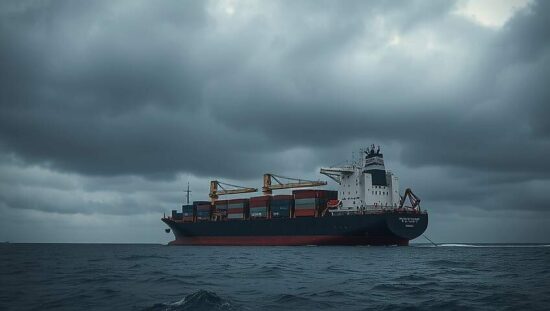
The United States has escalated tensions with Venezuela, announcing a naval blockade targeting oil tankers linked to the Maduro regime. Former President Donald Trump, via his Truth Social platform, declared that a “largest armada ever assembled in South American history” has encircled Venezuela and will continue to expand until alleged misappropriated assets are returned to the United States.
Trump’s statement accuses the Maduro government of financing illicit activities – including drug trafficking, human smuggling and violent crimes – through oil revenues derived from what he deems “stolen oil fields”. He further designated the Maduro regime as a “foreign terrorist organization” justifying the decision to implement a “complete and comprehensive blockade” of all sanctioned oil tankers entering or leaving Venezuelan waters.
This action follows a pattern of increasingly assertive U.S. naval operations in the Caribbean and Eastern Pacific, where vessels suspected of involvement in drug trafficking have been targeted. Most recently, a tanker was seized off the Venezuelan coast, further demonstrating Washington’s willingness to directly intervene in the nation’s maritime activity.
While the U.S. claims its actions are aimed at curtailing criminal enterprises and recovering misappropriated assets, the blockade has drawn immediate criticism from international legal experts. The maneuver is being widely interpreted as a violation of international law, potentially impacting Venezuelan economic stability and humanitarian access. The move risks exacerbating an already precarious situation and raises concerns over the potential for miscalculation and armed confrontation in the region. Critics argue the blockade represents a destabilizing unilateral action with potentially severe consequences for regional peace and the principle of free navigation. The escalation is also likely to complicate ongoing diplomatic efforts aimed at resolving the political crisis within Venezuela.