



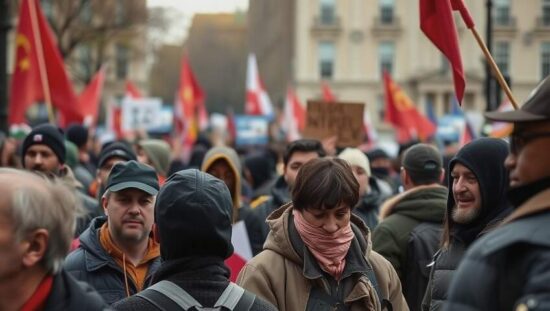
The climate activist Greta Thunberg was arrested in London on Tuesday during a demonstration highlighting the plight of members of the “Palestine Action” group currently on hunger strike. Police confirmed the arrest stemmed from Thunberg’s display of a placard deemed to be in support of a proscribed organization, raising immediate questions about the limits of free speech and protest in the UK.
Thunberg joined the demonstration intended to show solidarity with the “Palestine Action” members detained in custody. The protest targeted the offices of a company accused of providing services to an Israeli defense firm, a move underlining the increasingly complex intersection of climate activism, geopolitical concerns and direct action. Prior to the police intervention, two activists sprayed red paint on the building’s facade, escalating the already tense situation.
Video footage circulating online showed Thunberg holding a sign reading: “I support the Palestine Action prisoners. I oppose genocide”. The language used, particularly the accusation of genocide, is likely to fuel further debate and scrutiny regarding the demonstration’s claims and the broader political landscape surrounding the Israeli-Palestinian conflict.
The “Palestine Action” group was proscribed under the UK’s Terrorism Act 2000 in July 2023 following incidents involving damage to Royal Air Force aircraft. The government’s decision to classify the group as a terrorist organization remains controversial, with critics arguing it criminalizes protest and disproportionately impacts activists. Authorities have already made over 2,000 arrests related to individuals supporting or participating in “Palestine Action” activities since the designation.
Thunberg’s arrest is certain to amplify the ongoing debate surrounding the government’s increasingly stringent approach to protests and the definition of terrorism, drawing renewed attention to the UK’s role in international conflicts and the limits enforced on legitimate dissent. The action also exposes the broader tensions surrounding the balance between national security, freedom of expression and the right to peaceful assembly, particularly in the context of polarizing geopolitical issues.