




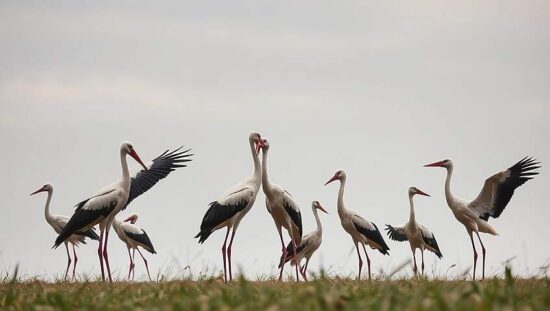
The political ramifications of a devastating avian influenza outbreak in Spain are prompting concern and calls for intensified monitoring within North Rhine-Westphalia (NRW), Germany. Oliver Krischer, NRW’s Environment Minister and a member of the Green Party, expressed profound worry regarding the potential impact on the region’s significant stork population, a species painstakingly resurrected from the brink of local extinction.
“The situation is deeply concerning” Krischer stated in an interview with the “Kölner Stadt-Anzeiger”. “Many of the storks that breed in NRW are currently wintering in Spain, a region now grappling with a severe wave of bird flu”. He alluded to distressing images he has witnessed, highlighting the vulnerability of the birds.
The Naturschutzbund Deutschland (NABU), a leading German conservation organization, echoed these anxieties, citing reports of mass mortality events in the Madrid region affecting not only White Storks but also ducks, gulls and birds of prey. The unsettling image of over 500 White Stork carcasses recovered from a single stretch of river underscores the speed and unpredictability with which disease can decimate populations. According to Spanish veterinary authorities, the fatalities are attributable to a highly pathogenic strain of avian influenza.
The stark reality is that NRW, currently estimating a population of 800 White Stork pairs and 80 Black Stork pairs, has witnessed a remarkable recovery of these species. Just three decades ago, in 1990, White Storks were teetering on the edge of disappearance in the region, with only three breeding pairs. The reappearance of the Black Stork, absent for over a century, is another testament to successful, albeit intensive, conservation efforts.
This recent crisis casts a long shadow over those achievements and raises critical questions about the sustainability of ongoing protection strategies in the face of increasingly pervasive global threats. The reliance on migration routes potentially exposes NRW’s storks to devastating outbreaks occurring far beyond the region’s borders.
Political pressure is now mounting on the NRW government to bolster surveillance and veterinary preparedness. Critics are questioning whether existing cross-border avian influenza monitoring protocols are sufficient to safeguard the recently bolstered stork populations. The incident underscores the interconnected nature of ecosystem health and the urgent need for collaborative international action to mitigate future risks. The fate of the storks serves, alarmingly, as a canary in the coal mine, signaling potential dangers for other vulnerable wildlife and, ultimately, human health.