




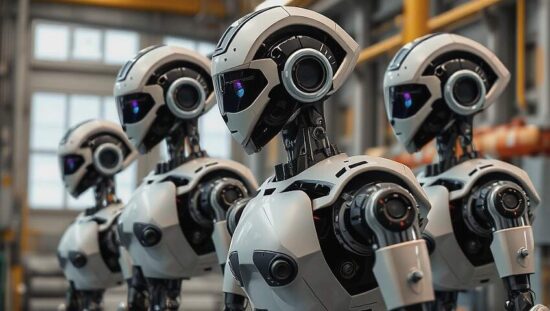
A surge in humanoid robot development is poised to reshape industrial landscapes, with analysts predicting widespread adoption and a potential economic boom, particularly in the United States and China. A recent study by management consultancy Horváth, reported by “Der Spiegel”, forecasts the commencement of serial production as early as 2026, with China and the US leading the charge. The study projects that approximately one million humanoid robots could be deployed in these two nations alone by 2030.
While possessing the capability to reliably perform logistics and production tasks within three years, the technology’s scope extends to domestic settings and elder/patient care by 2035, according to the report. Each unit, priced around $55,000, is expected to operate at roughly 3.5 times the efficiency of human labor. The potential market for these robots within China and the US is projected to exceed $1 trillion by 2050.
Despite this promising outlook, the German industrial sector appears hesitant. Horváth’s survey of 76 automotive companies, predominantly in German-speaking regions, revealed that only 30 are planning substantial investments in humanoid robotics. Andreas Brauchle, a partner at Horváth, believes this represents a critical misjudgment. “Companies urgently need to engage with this technology” he stated, emphasizing that Germany’s automotive industry, in particular, has an opportunity to regain international competitiveness through early adoption.
David Reger, CEO of German robotics startup Neura Robotics, echoed this sentiment, warning of “massive competitive disadvantages” for companies opting to delay investment. He anticipates a rate of development outpacing Horváth’s projections, with Neura Robotics aiming to deliver approximately five million cognitive and humanoid robots globally by 2030. “Europe must not hesitate” he urged.
Reger expressed particularly strong hopes for Germany, highlighting its inherent advantages in engineering, industrial infrastructure, production expertise and global brand recognition. However, he pointed to a deficit in speed and boldness as barriers to seizing a leadership position in this emerging industry. The question remains whether Germany possesses the necessary political will and entrepreneurial drive to capitalize on its potential before being overtaken by the accelerating advancements driven by the US and China.