




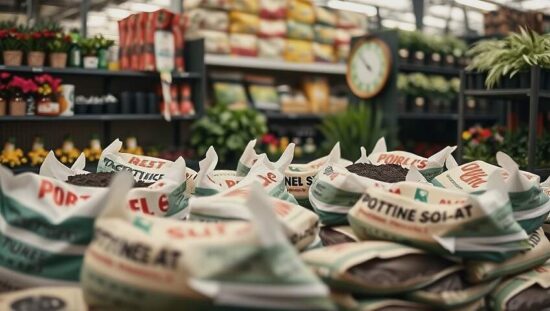
Data released Monday by the Federal Statistical Office (Destatis) reveals a complex and potentially misleading picture of Germany’s progress towards reducing peat usage in horticulture and landscaping. While the volume of peat incorporated into potting soils and growing media demonstrably decreased in 2024, the decline appears to be partially obscured by a shift in composition rather than a complete abandonment of the controversial material.
Across the 4.6 million cubic meters of potting soil destined for home gardens, a persistent 77 percent remained peat-containing, a marginal change from 2023’s figure of 78 percent. However, the proportion of peat within those products has dramatically fallen – from an average of 47 percent in 2023 to just 38 percent in 2024. This indicates a potential strategy of diluting peat content to superficially meet environmental targets, while continuing to rely on it as a core component. The total peat volume used in this sector amounted to approximately 1.4 million cubic meters, a decrease of 18.4 percent compared to 2023.
The situation within the professional horticultural and landscaping sector presents a similarly nuanced picture. While a reduction in peat use also occurred here, the decline was less pronounced, originating from a higher baseline. Of the 2.6 million cubic meters of growing media distributed, 84 percent contained peat, a rise from 80 percent in the previous year. However, mirroring the trend in the consumer market, the peat content within these professional-grade products has declined significantly, falling from 72 percent in 2023 to 63 percent in 2024. This resulted in a total peat volume of 1.4 million cubic meters, a relatively small reduction of 5.4 percent year-on-year.
These figures raise critical questions about the efficacy of current environmental policies and the transparency of industry practices. The German government’s climate protection plan aims for a significant decrease in peat usage in horticulture and landscaping, but the observed shifts in composition suggest a possible workaround, potentially prioritizing short-term compliance over long-term ecological sustainability. Critics argue that simply reducing the percentage of peat while maintaining its reliance creates a false sense of progress and risks delaying the necessary transition to peat-free alternatives. Furthermore, increased scrutiny is needed to ascertain whether the seemingly modest reductions in total peat usage are genuinely reflected in the long-term health of Germany’s peatlands, which are vital carbon sinks and biodiversity hotspots. The data underscores the need for a more robust and comprehensive assessment of environmental impact within the horticultural sector, moving beyond superficial metrics to focus on tangible ecological benefits.