




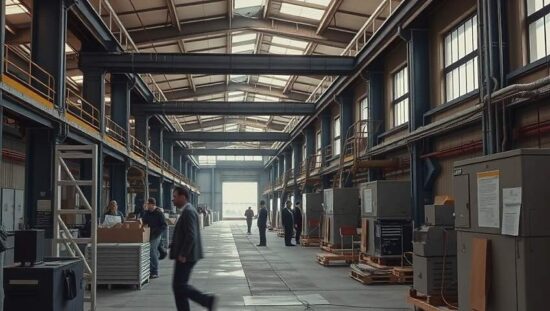
The German government has launched an expanded industrial dialogue, “Industry in Dialogue for Security” signaling a concerted effort to bolster national security capabilities through closer collaboration between the defense sector and broader industrial segments. The initiative, underscored by a joint address from Economics Minister Katarina Reiche (CDU) and Defense Minister Boris Pistorius (SPD), represents a strategic pivot aimed at navigating the evolving geopolitical landscape and addressing vulnerabilities exposed by recent global events.
Reiche’s assertion that “security policy is always also economic policy” highlights the government’s recognition that national defense is intrinsically linked to economic strength and stability. The dialogue moves beyond traditional defense industry conversations, incorporating representatives from various sectors and trade associations to foster cross-sector synergies. This broadening aims to mitigate supply chain vulnerabilities and generate what officials termed “scalable capabilities” and increased resilience.
The stated goals include leveraging “dual-use effects” a concept referring to technologies and innovations initially developed for military applications finding commercial applications and vice versa. Pistorius emphasized the need for enhanced networking between defense contractors, suppliers and businesses in unrelated sectors, directly impacting value chains from raw material sourcing to finished product delivery.
While proponents portray the initiative as a solution to bolster national capabilities, criticism is already emerging. Concerns have been raised regarding potential conflicts of interest and the ethical implications of blurring the lines between civilian and military technology development. Several industry analysts suggest the focus on “dual-use” technologies could inadvertently lead to increased government influence within civilian sectors and a potential distortion of market forces.
Furthermore, questions linger regarding the efficacy of integrating new suppliers into established value chains and the government’s capacity to effectively manage such a sprawling, multi-sector collaboration. The planned central role of the Bundeswehr’s new innovation center in Erding, designed to bridge military research and civilian innovation, has been viewed differently. While expected to provide a crucial platform, some observers worry about the potential for over-centralization and bureaucratic hurdles that could hamper agility.
The dialogue’s long-term impact remains to be seen, but its launch signifies a clear shift in German security strategy – one that places greater emphasis on fostering a resilient, interconnected industrial base, but one also ripe with potential pitfalls demanding careful oversight and transparent governance.