



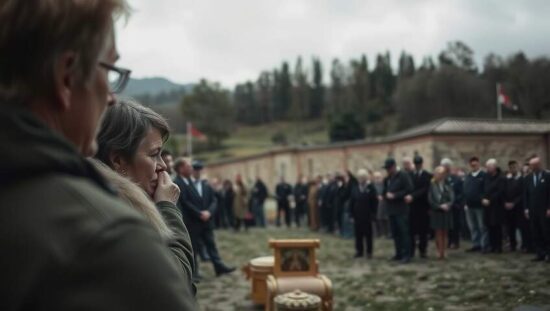
During recent German-Polish government consultations, a competition has been formally agreed upon for the creation of a memorial dedicated to Polish citizens and victims of Nazi persecution. The memorial, slated for construction in Berlin, is envisioned as a space for remembrance, cautionary reflection and a tangible symbol of German-Polish reconciliation. This initiative, while superficially positive, arrives amidst ongoing political tensions and raises critical questions about the depth of Germany’s commitment to confronting its historical responsibilities.
The agreement to return significant cultural artifacts to Poland further underscores a protracted and often-fraught process of restitution. Among the returned items are 73 parchment documents belonging to the Teutonic Order, pilfered from the Warsaw Crown Archives during the Second World War by German archivists. These documents, dating from 1215 to 1466, represent a painful chapter in Polish-German relations, highlighting a deliberate campaign of cultural appropriation carried out under Nazi occupation. The return acknowledges the theft, but critics argue it is a comparatively small gesture given the vast scale of cultural losses suffered by Poland.
The repatriation of a sculpted head of Saint James the Elder, separated from its accompanying statue in Marienburg (Malbork) near Gdańsk decades ago, adds another layer to the complex narrative. While the return of this artifact is viewed as a symbolic reunification, speculation remains about the circumstances of its initial removal from Poland in the 1950s, raising questions about the thoroughness of investigations into post-war cultural trafficking.
The competition for the memorial and the ongoing restitution efforts are welcome steps, but their true significance will depend on the sincerity behind them. A simple monument and the return of scattered relics are insufficient; true reconciliation requires a continuous and critical examination of historical injustices, alongside robust support for Polish historical research and cultural preservation, something which some observers feel has been lacking in recent years. The political climate surrounding these actions is also not without its complexities, with certain factions within both countries expressing reservations and contesting differing interpretations of historical events.