




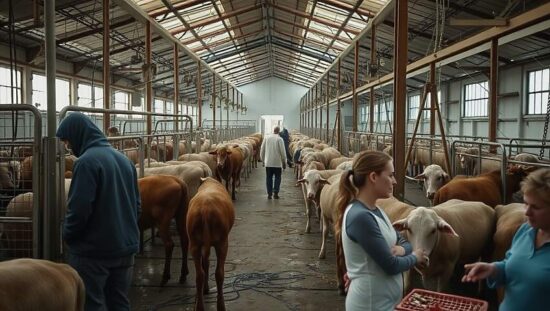
The German government is poised to mandate video surveillance in slaughterhouses, marking a significant shift from the previous coalition’s inaction and signaling a tougher stance on animal welfare standards. Bavarian Agriculture Minister Alois Rainer, of the Christian Social Union (CSU), announced the forthcoming legislation in an interview with the “Rheinische Post”, highlighting a commitment to bolstering oversight and addressing persistent concerns within the industry.
The proposed law will implement a tiered system, requiring video monitoring in larger slaughterhouses while exempting smaller operations. Rainer defended the decision, framing mandatory surveillance not merely as regulatory compliance but as a crucial “quality feature” for participating businesses. He emphasized that the recordings will serve as a valuable tool for local veterinary authorities in identifying and rectifying irregularities, potentially leading to improved animal welfare practices and enhanced accountability.
The move represents a direct rebuke of the previous “traffic light” coalition, which failed to successfully advance similar legislation. Rainer’s assertion, “The Ampel-Regierung ist daran gescheitert. Wir machen das jetzt” (The former coalition failed. We are doing it now), underscores the political significance of the initiative and the CSU’s determination to prioritize animal welfare where its predecessor stalled.
Beyond slaughterhouses, Rainer also pledged a more vigorous crackdown on the illegal puppy trade, condemning the practice of prematurely separating puppies from their mothers. He characterized the current situation as a “scandal” reflecting growing public pressure and demands for stricter regulations to protect vulnerable animals from exploitation. The initiative indicates a broader agenda of increased governmental intervention in the livestock and pet industries, likely to provoke considerable debate regarding the balance between economic interests and ethical considerations. Critics might question the practicality of enforcement and potential costs for smaller businesses, while animal welfare advocates will be scrutinizing the specifics of the legislation to ensure its effectiveness in safeguarding animal welfare.