




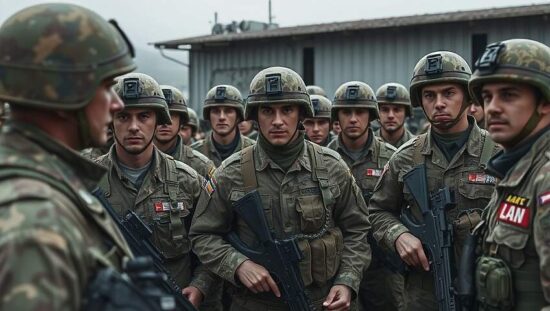
Serious allegations of racist, sexist and extremist incidents within a Bundeswehr (German Armed Forces) airborne infantry unit stationed in Zweibrücken have triggered a wave of alarm and demands for a swift and comprehensive investigation from German politicians. The accusations, reported to involve elements of the regiment, have prompted urgent calls for accountability and a critical re-evaluation of military culture.
Rheinland-Pfalz’s Minister President Alexander Schweitzer (SPD) condemned the alleged behavior, stating unequivocally that “hate speech, racism and sexism must not be tolerated”. He emphasized the need to ensure that all soldiers feel protected and that perpetrators face consequences, reinforcing the importance of the Bundeswehr’s commitment to addressing misconduct. While welcoming indications that the military is taking action, subtle concerns remain about the robustness of past responses.
The leader of the CDU (Christian Democratic Union) in Rheinland-Pfalz, Gordon Schnieder, described the situation as “completely unacceptable” underscoring the need for a “complete and transparent” inquiry to safeguard the reputation of the Bundeswehr within the region. Schnieder’s statement highlights a growing pressure for the military to not only address the immediate concerns but also proactively work to restore public trust.
The defense policy spokesperson for the CDU/CSU parliamentary group, Thomas Erndl, characterized the situation as a responsibility for all military leadership, stressing the need for immediate ministerial oversight. This comment suggests a desire for accountability to extend to the highest levels of the defense ministry.
Adding a particularly forceful tone, Anne König, the CDU’s family policy spokesperson, demanded stringent measures and the expulsion of those found responsible. She argued that it is “unbearable” for other soldiers to serve alongside individuals displaying such behavior, underscoring a deep sense of betrayal and a desire for a clear break from the reported misconduct. This demands go beyond mere disciplinary action, advocating for a fundamental cleansing of deeply embedded problematic attitudes.
The unfolding scandal is forcing a critical examination of the Bundeswehr’s internal culture and triggering a political debate around the effectiveness of existing oversight mechanisms and the broader question of how to cultivate a military environment aligned with Germany’s constitutional values.