




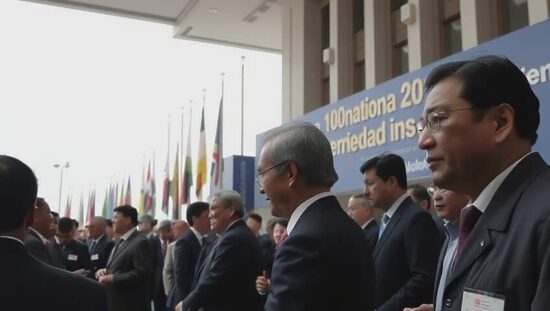
The German government staunchly defended the policy paper outlining the conclusions of the Berlin Ukraine summit, dismissing criticisms regarding its perceived lack of concrete detail. Government spokesperson Stefan Kornelius, responding to inquiries from the dts Nachrichtenagentur, emphasized the significance of the summit as a pivotal moment in international efforts to secure lasting peace in Ukraine.
Kornelius highlighted a demonstrable shift in European alignment and the crucial involvement of the United States, characterizing the joint declaration of support as a “substantial advancement”. He underscored the value of the US presenting “highly substantive proposals” regarding security guarantees for Ukraine, which are now actively integrated into ongoing negotiations. He declined to elaborate on specifics, asserting that disclosing details would be prejudicial to the delicate nature of the discussions.
The spokesperson stressed that the security guarantee issue is directly linked to progress on critical territorial disputes and ultimately, a ceasefire. The policy paper unveiled on Monday aims to establish a framework and preconditions for European support, implicitly acknowledging the complexities and potential for disagreement surrounding these guarantees.
However, critics are questioning the true impact of the Berlin summit and the policy paper, arguing that while the rhetoric conveys unity, the ambiguity surrounding the nature of these guarantees – and the level of commitment from the participating nations – leaves room for skepticism. The US proposals are particularly being scrutinized, with analysts pointing to a potential divergence between stated ambitions and the practical limitations of American involvement in guaranteeing Ukraine’s security. The success of the framework, therefore, hinges on translating the declaratory language of the Berlin summit into tangible, legally binding commitments, a feat that remains to be determined amidst ongoing geopolitical tensions and varying national priorities.