




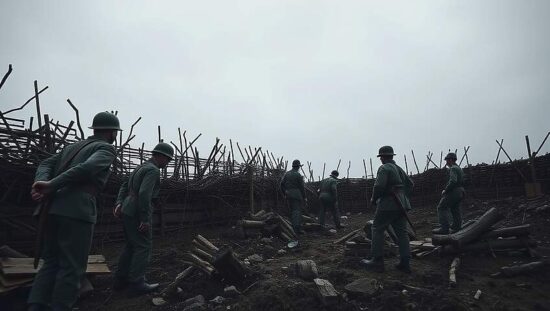
Germany is poised to deploy engineering troops to reinforce Poland’s eastern border with Belarus and Russia’s Kaliningrad exclave, marking a significant escalation in NATO’s response to perceived Russian aggression and raising questions about the evolving nature of German military engagement abroad. Beginning in April 2026 and slated to continue until the end of 2027, the operation, dubbed “Eastern Shield” will see a “mid-double-digit” number of soldiers from the German Army’s engineering and support branches undertaking “pioneering activities” – primarily constructing defensive positions.
The planned deployments involve the establishment of fortifications, including trenches, barbed wire barriers and tank traps, explicitly intended to deter a potential Russian offensive against Poland, a key NATO ally. This move highlights the increasing concern within the alliance regarding Russia’s actions in Ukraine and its broader geopolitical ambitions.
Crucially, the German Defense Ministry, under Minister Boris Pistorius, has asserted that a parliamentary mandate is “not” required for this operation. This decision, justifying the omission based on the argument that it doesn’t constitute armed deployment or involve direct combat risk, is drawing criticism from within Germany. Some political analysts and opposition lawmakers are questioning the legality and transparency of bypassing standard parliamentary oversight procedures, particularly given the sensitive nature of the deployment and the proximity to potential conflict zones.
The legal maneuvering surrounding the absence of a mandate underscores a growing trend – the utilization of ambiguous wording to authorize military involvement without formal parliamentary approval. While framed as defensive engineering work, the logistical and strategic implications of establishing a substantial defensive barrier along Poland’s border are undeniably significant. This proactive posture represents a tangible shift in Germany’s foreign policy, moving beyond largely symbolic gestures to a more assertive role in bolstering NATO’s eastern flank, but also inviting scrutiny regarding the boundaries of German military authority and the ongoing debate about its constitutional responsibilities. The long-term ramifications of “Eastern Shield” both domestically and within the broader NATO framework, remain to be seen.