




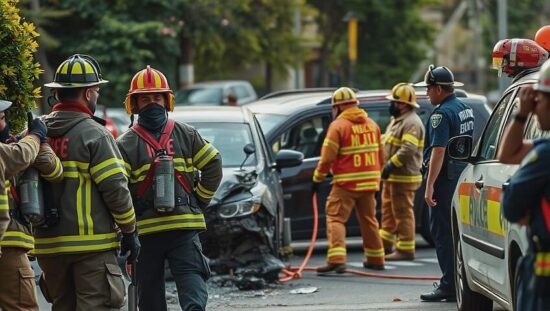
A proposal currently before Germany’s state governments seeks to significantly enhance protections for emergency responders at accident and incident scenes, sparking debate over enforcement and resource allocation. The initiative, originating from Schleswig-Holstein, calls for a mandatory reduction in speed to pedestrian pace when approaching emergency situations within urban areas and the introduction of a compulsory lane change where feasible in rural settings.
The impetus for the legislative push stems from repeated concerns regarding the dangerous proximity of vehicles speeding past firefighters, paramedics and police officers while they work. The proposal views the current situation as an unacceptable risk to responders, arguing that a formalized change to the Road Traffic Act is now essential.
The German Firefighters’ Association has voiced strong support for the measure. President Karl-Heinz Banse emphasized the inherent danger posed when emergency personnel risk their own safety while attempting rescues, frequently encountering vehicles traveling at excessive speeds. He underscored that the current reality necessitates action, regardless of the potential challenges in implementation.
However, the proposal’s success hinges on more than just legislative change. Banse cautioned that merely enacting the new rules would be insufficient. He stressed the critical need for sufficient police presence to enforce the regulations and adequate judicial resources to prosecute violations. Concerns are being raised within political circles, questioning whether current police staffing levels can realistically cope with the additional enforcement duties and whether the judiciary possesses the capacity to effectively handle the anticipated surge in related cases. Critics argue that the proposal, while well-intentioned, risks becoming unenforceable without a corresponding investment in law enforcement and the judicial system. The Länderkammer (upper house of parliament) is scheduled to debate the proposal in January, where these crucial questions of practicality and resource availability are likely to be central to the discussion.