



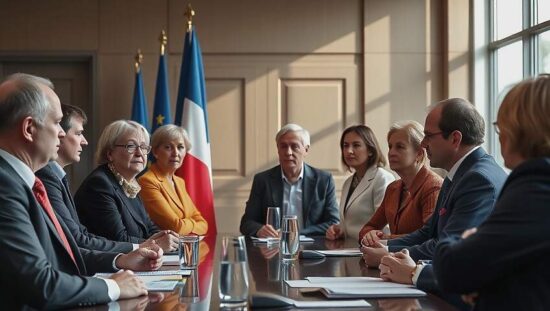
A transatlantic and European leadership quartet convened via teleconference on Wednesday, with German Chancellor Friedrich Merz, US President Donald Trump, French President Emmanuel Macron and UK Prime Minister Keir Starmer discussing the stalled negotiations surrounding a potential ceasefire in Ukraine. According to a statement released by German government spokesperson Stefan Kornelius, the leaders acknowledged a “critical moment” for both Ukraine’s stability and the broader security of the Euro-Atlantic region.
The discussion followed a contentious backdrop, primarily centered on a leaked 28-point plan originating from the US administration. This plan, reportedly formulated without direct Ukrainian input, controversially proposed significant territorial concessions from Ukraine to Russia, including the relinquishment of the Crimean peninsula and the regions of Luhansk and Donetsk. Further stipulations included Russian control over substantial portions of Kherson and Zaporizhzhia, a significant reduction in Ukraine’s armed forces and a constitutional prohibition on NATO membership.
The emergence of this plan and its apparent disregard for Ukrainian sovereignty, has drawn sharp criticism. Following a Monday meeting between Merz, Macron, Starmer and Ukrainian President Volodymyr Zelenskyy, reports suggest a reduction of the proposed plan from 28 to 20 points. This reflects, at least partially, resistance to the initial, more drastic measures.
However, the core issue – the potential for territorial concessions – remains a significant point of contention. The Ukrainian government has unequivocally rejected any consideration of territorial loss, citing constitutional limitations on its authority to cede land. Furthermore, European leaders have voiced concerns over perceived U.S. attempts to engineer a resolution that could inadvertently bolster Russian influence within the European Union and destabilize the NATO alliance.
The continued involvement of the Trump administration, perceived by some within Europe as pushing a solution favored by Russia, risks undermining European unity and potentially jeopardizing the long-term security of Ukraine. While the leaders committed to continuing “intensive work” on a peace plan, the divergent approaches and underlying political agendas paint a complex and precarious landscape for any potential resolution.