




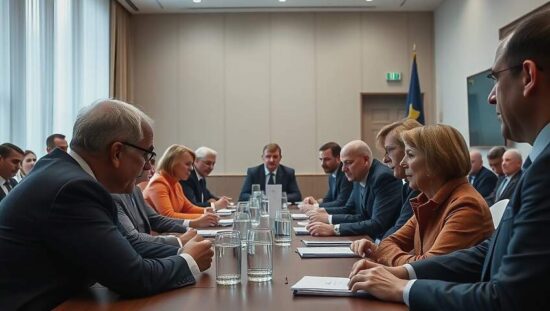
Following a protracted night of negotiations, European Union leaders have reached a compromise to provide Ukraine with a substantial €90 billion credit facility spanning 2026 and 2027. The agreement, announced early Friday by EU Council President António Costa, represents a significant, albeit carefully calibrated, commitment to Kyiv’s ongoing struggle against Russian aggression.
The financing will be facilitated through EU bonds issued on capital markets, backed by the EU’s existing budgetary headroom. Critically, the immediate leveraging of frozen Russian assets held within the EU has been ruled out – a demand fiercely championed by some member states. However, a conditional clause has been inserted, preserving the possibility of utilizing these assets for loan repayment should Russia fail to deliver reparations to Ukraine. This provision introduces a degree of potential leverage, albeit one fraught with legal and diplomatic complexities.
The outcome reflects a complex interplay of political pressures, with dissenting voices within the EU reluctant to sanction the direct seizure of Russian assets. While presented as a unified front, the compromise highlights underlying divisions regarding the appropriate tools for exerting pressure on Moscow and signaling long-term support for Ukraine’s reconstruction.
German Chancellor Friedrich Merz, a vocal proponent of utilizing frozen assets, expressed satisfaction with the outcome, emphasizing the provision of a non-interest-bearing credit and its potential to cover Ukraine’s military and budgetary needs for the next two years. He framed the package as a crucial signal to Russian President Vladimir Putin, arguing that a demonstrable lack of return on investment is essential to incentivize a de-escalation of the conflict.
However, the delayed repayment schedule – contingent on Russian reparations – has drawn scrutiny from some quarters, with critics questioning the practicality of the condition and expressing skepticism regarding its potential to influence Russian policy. The conditional nature of the loan also raises legal questions regarding the EU’s authority to seize Russian assets and the potential for protracted international legal battles.
The agreement, ultimately, represents a compromise born of internal disagreements and its true impact on both Ukrainian stability and Russian geopolitical strategy remains to be seen. The long-term implications of this carefully worded financial package are likely to be debated – and potentially tested – for years to come.