




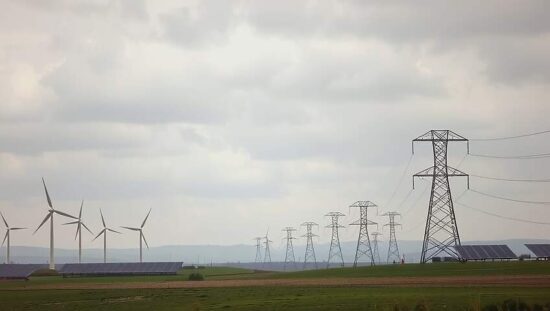
The head of Eon, Europe’s largest power grid operator, Leonhard Birnbaum, is calling for a significant shift in Germany’s energy policy, arguing that consumer needs and job creation should take precedence over prioritizing connections for wind and solar farms. Birnbaum’s remarks, published in the Süddeutsche Zeitung, directly challenge the current legal framework which mandates preferential treatment for renewable energy projects when connecting to the grid.
He contends that this prioritization, while intended to foster green energy transition, is now actively hindering the development of crucial industries. “When a medium-sized business, a new industrial area, or a data center wants to connect, they may be left in the lurch” Birnbaum stated, highlighting the potential for job losses as a consequence. He points to the current saturation of wind and solar power within the network as a key factor driving his call for reform.
Birnbaum’s proposal represents a politically charged intervention into Germany’s energy transition debate. He explicitly urges the federal government to amend the existing regulations, suggesting that priority access for grid connections should be granted to projects that demonstrably contribute to job creation. This position implicitly critiques the existing emphasis on renewable energy expansion, regardless of its broader economic impact.
Beyond questioning grid connection priorities, Birnbaum also advocates for the abolishment of subsidies for solar installations. While acknowledging the seemingly modest annual cost of the fixed feed-in tariffs, he highlights the long-term financial burden, estimating a potential multi-billion euro commitment over the 20-year duration of these subsidies, ultimately borne by all electricity consumers.
The timing of Birnbaum’s statement is noteworthy. Eon, headquartered in Essen and a key player within the German DAX index, holds a significant stake in the nation’s energy infrastructure, managing 70% of onshore wind turbines and 50% of solar parks connected to its grids. This direct, influential voice advocating for a recalibration of energy policy is likely to intensify scrutiny of the government’s approach to the energy transition and potentially trigger a broader debate regarding the balance between environmental sustainability and economic growth. Critics are already suggesting this represents a strategic maneuver by Eon, aiming to alleviate grid congestion and potentially benefit from a shift towards investment in traditional industry.