




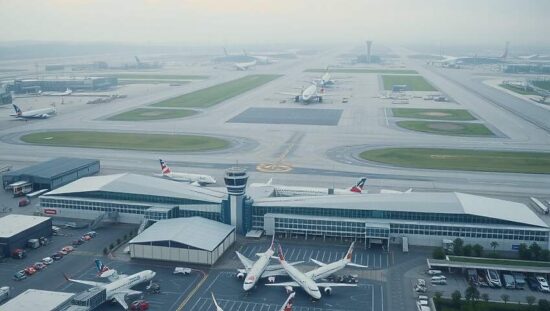
The German government is escalating concerns over the escalating threat posed by illegal drone activity near airports, with Transport Minister Patrick Schnieder issuing a stark warning about potential security breaches and disruption to air traffic. Speaking to the Funke-Mediengruppe media group, Schnieder emphasized the increasingly frequent interference of unauthorized drones in the vicinity of airports as a serious challenge to national safety protocols.
Schnieder’s remarks highlight a palpable shift in the government’s stance, moving beyond reactive measures to a posture of proactive vigilance. He stated that coordinated efforts with regional states to counter drone incursions are underway, but cautioned that their effectiveness remains to be seen, calling for continued and rigorous monitoring. The Minister’s direct mention of “increasing attacks” suggests a pattern of deliberate or reckless drone operation, implying a potential malicious intent that demands a robust response.
The current policy of halting all air traffic upon drone sighting is being defended as non-negotiable. Schnieder rejected any alternative approaches, arguing that passenger and aircraft safety must remain the absolute priority. He forcefully underscored the potential catastrophic consequences of a collision between a drone and an aircraft, a scenario he deemed unacceptable to even contemplate. “Safety first, particularly in air traffic” he asserted, arguing that temporary flight suspensions are a necessary precaution in mitigating potentially devastating risks.
However, the reliance on complete flight shutdowns raises questions about the economic impact and the effectiveness of the strategy in the long term. Critics argue that the current system is overly cautious, leading to significant disruption and financial losses for airlines and airports. While Schnieder acknowledged the necessity of prioritizing safety, the political pressure to address the economic ramifications of such frequent flight interruptions is likely mounting, raising the possibility of a future reassessment of the established protocols, potentially coupled with requests for advancements in drone detection and mitigation technology. The situation underscores a growing tension between national security concerns and the economic viability of air travel infrastructure.