




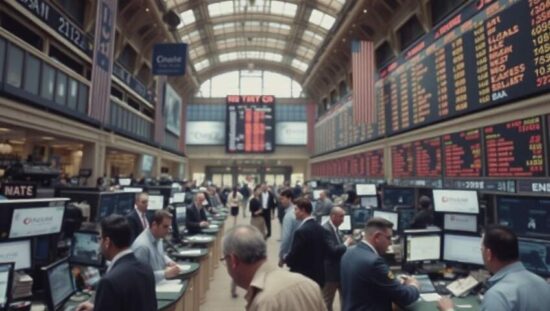
The German DAX index experienced a slight downturn on Wednesday, retreating from a modestly positive start to trade in the red by midday. The index was calculated at approximately 24,055 points, a decrease of 0.1 percent compared to the previous trading day. While Eon, Rheinmetall and Commerzbank led the gains, Volkswagen, Adidas and Porsche Holding concluded the session among the top performers on the downside.
The day’s trading was significantly impacted by a surprisingly weak Ifo business climate index released in the morning, prompting a stark assessment from VP Bank’s Chief Economist Thomas Gitzel. “There are no cheerful messages from Munich for Christmas” he stated, underscoring a trend of German businesses scaling back projections toward the year’s end.
The context for this shift in sentiment is a period of conflicting economic signals. While the Purchasing Managers’ Index (PMI) for the German economy showed a contraction from November levels, the ZEW economic expectations survey indicated a positive trajectory. The Ifo index release represented a crucial assessment and the result appears to solidify a 2-to-1 advantage for economic pessimists.
A particularly concerning detail revealed by the Ifo index is the repeated downward revision of business outlooks. This pessimism is especially pronounced within the manufacturing sector, highlighting a growing disconnect from initial expectations surrounding government infrastructure programs. Gitzel notes that numerous companies anticipated swift positive impacts from these programs, a prediction that has not materialized due to slow disbursement and inadequate conversion of funds into genuine investment. The downturn extends beyond manufacturing, with a deterioration in sentiment observed even within the service sector. He attributes this to shrinking disposable incomes among private households, directly impacting the spending patterns driving the service industry.
The Euro weakened against the US dollar on Wednesday afternoon, trading at $1.1716, with the dollar fetching €0.8535. Concurrently, oil prices saw a significant increase, with Brent crude reaching $60.17 per barrel-a 2.1 percent increase from the previous day’s closing price. The combination of a declining index, weakening Euro and rising oil prices collectively underscores a complex and potentially volatile economic landscape for Germany and the wider Eurozone, raising questions about the effectiveness of current policies and the resilience of the German economy in the face of approaching headwinds.