



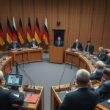

The German Federal Council (Bundesrat) has approved the 2026 budget, signaling a tacit acceptance of the government’s fiscal strategy despite ongoing debates about its long-term sustainability. The budget, totaling €524.54 billion, represents a significant allocation of resources across several key areas, although its approval without invoking the mediation committee highlights a complex interplay of political compromises and underlying tensions.
Revenue is projected at €387.21 billion, bolstered by €97.96 billion in borrowing and a further €39.36 billion from miscellaneous sources. Crucially, a substantial portion of the net borrowing – €57.57 billion – is designated under the area exemption for defense-related and certain security-related expenditures, effectively bypassing the stringent debt brake (Schuldenbremse). This circumvention has drawn criticism from fiscal conservatives and opposition parties, who argue it creates a dangerous precedent for bypassing budgetary constraints and masking the true extent of government debt.
The budget’s substantial investments in infrastructure and climate neutrality – allocated €58.07 billion through the “Infrastructure and Climate Neutrality” special fund and €34.80 billion from the “Climate and Transformation Fund”) – underscore the government’s commitment to these priorities. However, the dedicated €25.51 billion for the Bundeswehr (German Armed Forces) through a special fund raises questions about the shifting national priorities and the potential diversion of resources from other societal needs. While proponents argue these investments are essential for national security in a volatile geopolitical climate, critics contend that an escalating defense budget contributes to an arms race and inadequately addresses pressing domestic challenges such as social inequality and healthcare.
The absence of objections from the Bundesrat, despite the budgetary maneuvers and significant allocations, suggests a delicate balance was struck among the federal states. It remains to be seen whether this broad agreement can endure as economic conditions evolve and the long-term consequences of bypassing the debt brake become more apparent. The budget’s approval, while a procedural victory for the government, underscores an underlying fragility in Germany’s fiscal planning and opens the door for a renewed debate about the nation’s financial trajectory.