



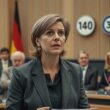

The German Green Party’s parliamentary group leader, Katharina Dröge, is pressing for a fundamental recalibration of the ruling “black-red” coalition government ahead of a planned coalition committee meeting this Wednesday. Dröge’s call for a “fresh start” comes amidst a turbulent period for Chancellor Olaf Scholz’s alliance, marked by repeated missteps and precarious near-breakdowns stemming from the actions of the opposition Christian Democratic Union (CDU) leader, Friedrich Merz.
Dröge’s remarks, delivered to RTL and ntv, highlight a growing sense of unease within the coalition, particularly the Greens, who feel the coalition’s initial programmatic momentum has been eroded by reactive crisis management. The repeated challenges posed by Merz, characterized by increasingly assertive and, at times, destabilizing demands, have left the government appearing fragile and lacking strategic direction.
The Green leader argues that the upcoming coalition committee meeting represents a crucial opportunity to move beyond reactive measures and establish a clear, forward-looking agenda. She explicitly called for a new government work program outlining priorities for the coming year. Dröge identified three key areas demanding immediate attention: a comprehensive reform of Germany’s social security system, concerted efforts to improve the economic climate – a reference to the anxieties surrounding inflation and energy costs – and a renewed commitment to ambitious climate protection measures.
Critically, Dröge signaled that the restoration of public trust is paramount. “Trust is an incredibly valuable political currency, especially in such uncertain times” she stated, implicitly criticizing the government’s perceived lack of transparency and the often-acrimonious public discourse surrounding coalition disagreements. The Green Party’s demand suggests a desire to recalibrate not only policy, but also the coalition’s approach to communication and public engagement, acknowledging that maintaining political stability hinges on regaining the confidence of the electorate. The success of this initiative, however, remains dependent on the willingness of the coalition partners, particularly the Social Democrats, to embrace a substantial shift in strategy and address the underlying tensions that have plagued the government in recent months.