




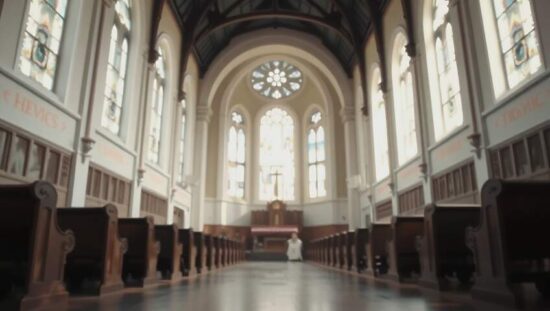
Catholic Church Faces Growing Abandonment of Sacred Spaces
A concerning trend is sweeping across Germany as the Catholic Church grapples with dwindling membership and a shifting demographic landscape.. Data released by the German Bishops’ Conference (DBK) reveals that at least 46 Roman Catholic churches and chapels have been permanently abandoned, a process formally termed “profanierung” as of December 1st, 2025. This represents a significant decline compared to the previous year, when at least 66 such closures were recorded.
“Profanierung” signifies a formal legal act within the Catholic Church, legally removing a building’s designation as a sacred space. The DBK acknowledges that the publicly reported numbers likely underestimate the actual scale of closures, as not all instances are consistently documented in diocesan newsletters. The opaque nature of the reporting process further complicates a comprehensive understanding of the situation.
While the Evangelical Church in Germany (EKD) has yet to release comparable figures, preliminary data from 2022 indicates a similar pattern of deconsecration and disposal. That year saw 23 churches, chapels and community centers sold or demolished, signaling a deliberate effort to manage increasingly redundant infrastructure. The EKD, notably, does not track the formal liturgical act of “Entwidmung” (dedication removal), making a direct comparison challenging.
The accelerating rate of church closures is a stark visual manifestation of a deeper systemic crisis. Years of declining membership due to demographic changes and increasing numbers of people leaving the faith have placed severe strain on the Church’s financial and logistical resources. In 2024, membership in the Catholic Church totaled over 19.7 million, while a further 18 million are affiliated with the EKD. This combined total constitutes less than half of Germany’s population, highlighting a dramatic erosion of religious affiliation.
The decision to permanently close places of worship raises critical questions about the future of the Catholic Church in Germany. Beyond the immediate logistical challenges of managing abandoned properties, the closures inevitably fuel anxieties about the institution’s relevance and ability to adapt to a rapidly changing society. Critics argue that the DBK’s approach lacks transparency and fails to adequately address the underlying causes of membership decline, focusing instead on reactive measures rather than proactive engagement with the population. The shrinking footprint of the Catholic Church is no longer a distant prospect, but a tangible reality with profound implications for the nation’s cultural and social fabric.