



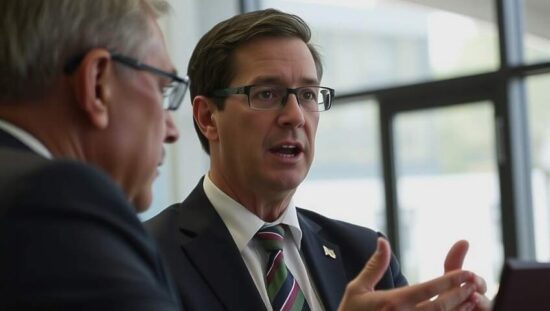
The simmering tensions within Germany’s ruling Christian Democratic Union (CDU) have erupted into a public dispute, with Chancellor’s Office Chief Thorsten Frei vehemently defending his approach against accusations of undermining party cohesion and governmental coordination. Frei’s recent public interventions, particularly regarding the contentious pension package, have drawn criticism from within the CDU, prompting him to respond directly to the charges in an interview with “Focus” magazine.
The core of the discontent revolves around concerns that Frei’s frequent public appearances detract from the behind-the-scenes work necessary for effectively governing. Critics allege he prioritizes media engagement over meticulous policy alignment, a perception amplified by the current debate surrounding pension reforms. “The real work happens at the desk, not in front of the cameras” Frei insisted, acknowledging the anxieties while also emphasizing his reasoned decision-making process. He detailed a selective approach to interview requests, accepting only those he believes offer an opportunity to shape public understanding and explain complex policy decisions, even if he wasn’t directly involved in their initial formulation.
Frei’s defense highlights a significant difference in leadership style compared to his predecessor, positioning himself as a politician rather than a bureaucrat. This assertion carries political weight, suggesting an intentional effort to inject greater visibility and a more proactive communication strategy into the traditionally discreet role of Chancellor’s Office Chief. This contrasts with a perceived desire for a more contained and internally-coordinated approach advocated by some within the CDU.
The incident underscores a broader internal struggle within the CDU, pitting a more communicative and arguably more politically assertive style against more traditional, hierarchical structures. Frei’s emphatic declaration of enjoying his role and viewing it as a privilege, coupled with his refusal to comment on hypothetical aspirations for the position of party faction leader, solidifies his commitment to the current trajectory. However, the ongoing debate shines a light on the delicate balance between advocating for government policy and maintaining a unified front within a governing coalition facing considerable public scrutiny. The incident also raises questions about the evolving role of political communication in an era demanding immediate and direct engagement with the electorate and the potential impact on internal party dynamics.